


Subtotal $0.00

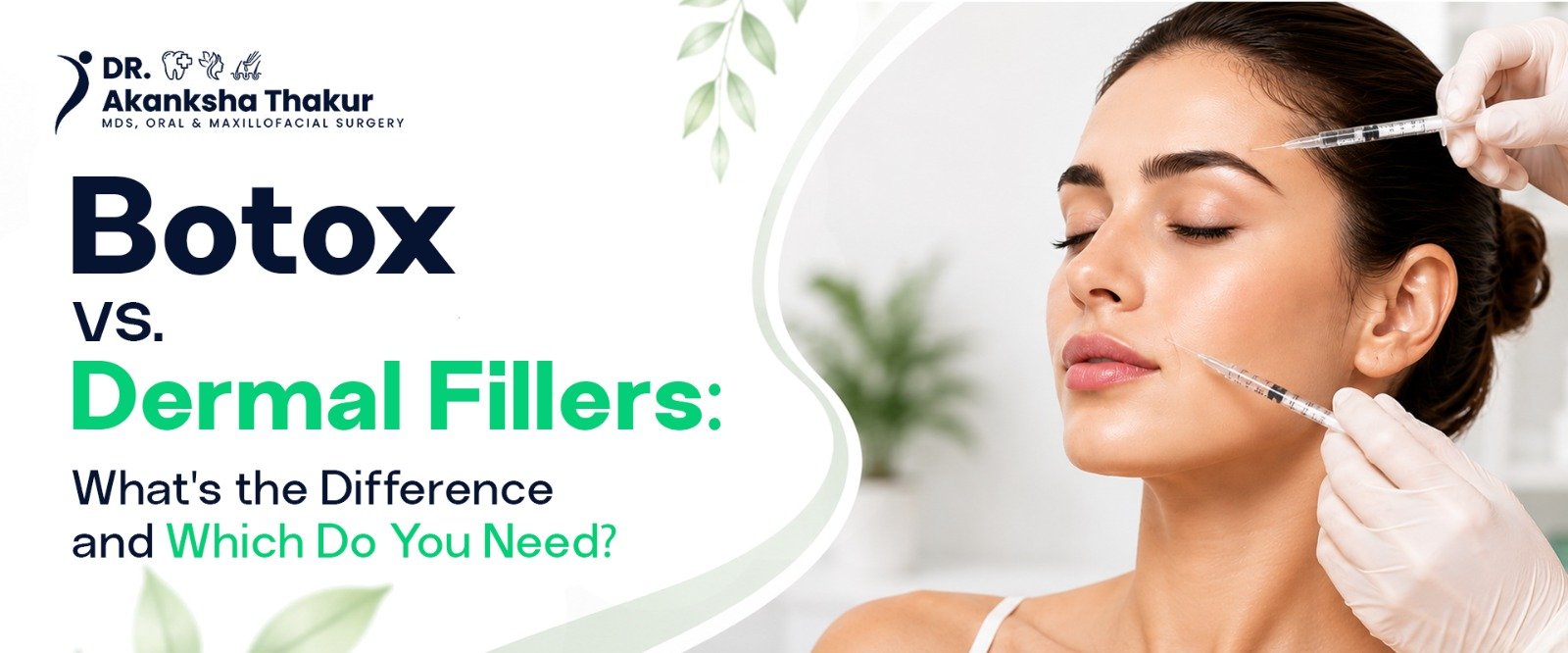
You stand in front of the mirror and notice a line that was not there last year. Maybe it shows up only when you smile. Maybe it stays even when your face is relaxed. You have heard of Botox. You have heard of fillers. But you do not know which one actually fixes what you see. This confusion is common, and it is the reason most people delay treatment or pick the wrong one first.
Botox and dermal fillers are the two most requested injectable treatments in cosmetic dermatology, but they do not solve the same problem. Botox relaxes the muscles that create movement based wrinkles, such as forehead lines and crow’s feet. Dermal fillers restore lost volume in areas like the cheeks, lips, and under the eyes. Many people eventually benefit from both, once a proper assessment shows where the concern is coming from. Dr Akanksha Thakur, a doctor in Kondapur, Hyderabad, recommends this kind of assessment before choosing either treatment. Learn more at drakankshathakur.in.
Key Takeaways
- Botox relaxes muscles and treats dynamic wrinkles caused by expression, such as frown lines and crow’s feet.
- Dermal fillers add volume and treat static wrinkles or hollow areas, such as sunken cheeks or thin lips.
- Botox results take three to seven days to show and last a few months.
- Filler results are visible immediately and can last from several months to over a year, depending on the product.
- Both treatments can be combined safely when assessed by a qualified doctor.
- Choosing the right treatment depends on whether your concern comes from muscle movement or volume loss, not personal preference alone.
What is the real difference between Botox and dermal fillers?
Think of your face as having two separate ageing processes. One is muscle movement. The other is volume loss. Botox and fillers are both injectable anti-ageing treatments, but each one solves a different half of this problem.
Botox is a brand name for a purified form of botulinum toxin. As one of the most common wrinkle-relaxing injections, it blocks the nerve signal to a muscle, so the muscle cannot contract fully. This is why botulinum toxin injections work so well for dynamic wrinkles, the lines caused by expressions like frowning or raising your eyebrows.
Dermal fillers work in a completely different way. They do not touch muscles or nerves at all. A facial filler is a gel, usually made from hyaluronic acid, placed directly under the skin to add structure and volume. It physically fills in a hollow or crease rather than relaxing anything.
The simplest way to remember this: Botox stops movement. Filler adds volume. Once you know which problem you have, choosing between these two cosmetic injectables becomes far easier.
How does Botox actually work on your face?
Botox targets dynamic wrinkles, the lines that form only when a muscle moves, such as when you frown, squint, or lift your eyebrows. Over years, repeated movement in the same spot creates a permanent crease, even at rest. As a preventive wrinkle reduction option, Botox interrupts this pattern early, which is why many doctors recommend it before deep lines set in.
Common areas treated with this injectable anti-ageing treatment include the forehead, the space between the eyebrows, and the corners of the eyes. The injection itself takes only a few minutes and needs no downtime. You will not see results immediately. Most people notice smoother skin within three to seven days, with full effect visible after about two weeks.
The results are not permanent. As the effect wears off, the muscle slowly regains its normal movement. This is a safety feature, not a flaw. If you are not fully happy with the outcome, it corrects itself naturally over a few months instead of staying that way forever.
How do dermal fillers restore volume and structure?
Dermal fillers solve a different concern: static wrinkles and lost facial volume. These are lines and hollows that stay visible even when your face is completely relaxed. They appear as skin elasticity and collagen naturally decline with age.
An injectable filler is placed directly into the area that needs support. Most hyaluronic acid fillers use a substance your skin already produces to hold moisture and structure. Because of this, results tend to look soft and natural rather than stiff or artificial.
Common areas for facial fillers include the cheeks, lips, under-eyes, and the folds running from the nose to the corners of the mouth. Unlike Botox, filler results are visible immediately. There is no waiting period to see the change, though mild swelling can make the final result look slightly different after a few days.
How do you know which one your face actually needs?
This is the question most articles skip, and it is usually the only one that matters to you. The answer comes down to a simple test: does the line appear only when you move your face, or is it there all the time?
If your lines only show up when you smile or frown
This means the wrinkle is caused by muscle movement. Forehead lines, frown lines between the eyebrows, and crow’s feet near the eyes usually fall into this category. Botox is the right starting point, because it treats the muscle causing the line, not just the line itself.
If your lines are there even when your face is relaxed
This points to volume loss rather than muscle activity. Hollow cheeks, thinning lips, flattened under-eye areas, and deep nasolabial folds usually need filler. No amount of muscle relaxation fixes a hollow area, because the problem is structural, not muscular.
Many people eventually need both, since facial ageing rarely affects only one system at a time. Starting with the treatment that matches your main concern gives a better, more natural result than guessing.
Can Botox or dermal fillers prevent ageing?
Neither treatment stops ageing altogether, but used early, they can slow how visible it becomes. Starting Botox in your late twenties or early thirties, before expression lines become permanent creases, is often called preventive Botox. It does not stop your skin from ageing, but it reduces the repeated muscle movement that turns a temporary line into a permanent one over time.
Fillers work differently here. Since they add volume rather than prevent movement, they are less about prevention and more about restoring what natural collagen loss has already taken away. Neither injectable anti-ageing treatment replaces good sun protection, a healthy skincare routine, and lifestyle habits, which remain the real foundation of long-term skin health. Think of Botox and fillers as tools that manage visible signs of ageing, not treatments that pause the ageing process itself.
Can Botox and fillers be used together safely?
Yes, and this combination is common in real practice. Since Botox and fillers treat different problems, they do not interfere with each other. A typical combination might use Botox on the forehead and frown lines while using filler to restore volume in the cheeks or under the eyes.
The key to a good combination result is sequencing and restraint. A skilled practitioner assesses which areas genuinely need muscle relaxation and which need volume, rather than injecting both everywhere out of habit. Overuse of either treatment can make the face look frozen or overfilled, which defeats the purpose of a natural-looking result.
If you are new to injectables, it is often better to start with one treatment, see how your face responds, and add the second only if needed. This gives you and your doctor a clearer picture of what your face actually requires.
What should you do before and after Botox or dermal fillers?
Before your appointment
Avoid blood-thinning medication, alcohol, and supplements like fish oil or vitamin E for about 24 to 48 hours before treatment, since these can increase bruising. Come in with a clean face, free of makeup, and share your full medical history with your doctor, including any medication you take regularly. If you have an important event coming up, schedule your session with enough buffer time for swelling or bruising to settle.
After your appointment
Avoid touching, rubbing, or applying pressure to the treated area for the first few hours. Skip strenuous exercise, saunas, and alcohol for about 24 hours, since increased blood flow can worsen swelling. For Botox, avoid lying flat or bending over for several hours, as this can cause the product to shift slightly. For fillers, mild swelling or tenderness is normal and usually settles within a few days. Contact your doctor immediately if you notice unusual pain, blanching of the skin, or a pattern that looks very different from what was discussed.
Who should avoid Botox or dermal fillers, and what are the risks?
Who should avoid these treatments
Botox and fillers are not recommended during pregnancy or while breastfeeding, since there is not enough safety data for these groups. People with certain neurological or neuromuscular disorders, active skin infections at the injection site, or known allergies to the specific product ingredients should also avoid treatment until cleared by a doctor. If you have an autoimmune condition, discuss it openly with your doctor before booking, since it may affect healing and the choice of product.
Side effects to know about
Both treatments are considered safe when performed by a qualified, trained professional in a proper medical setting, and that last part matters more than most people realise. With Botox, mild and temporary side effects can include slight bruising, a mild headache, or minor drooping of an eyebrow if the dose is placed incorrectly. With fillers, possible side effects include swelling, tenderness, or small lumps under the skin in the first few days. Rare but serious complications can occur if filler is accidentally placed into a blood vessel, which is why anatomical knowledge and injector experience matter more than the brand of product used.
This is also a regulatory issue, not just a quality one. The National Medical Commission has stated that aesthetic procedures should be performed only by properly trained, registered medical practitioners, and has warned against unqualified or informally trained individuals offering these treatments. Separately, under the Clinical Establishments (Registration and Regulation) Act, facilities offering medical procedures are expected to be registered and meet minimum standards set by the Ministry of Health and Family Welfare. Before choosing a provider, confirm they are a registered doctor with specific training in injectables, and ask to see real results from their own patients.
What Is the Quickest Way to Compare Botox and Dermal Fillers?
| Factor | Botox | Dermal Fillers |
|---|---|---|
| How it works | Relaxes muscle movement | Adds volume under the skin |
| Best for | Dynamic wrinkles (frown lines, crow’s feet) | Static wrinkles and volume loss |
| Common areas | Forehead, between brows, around eyes | Cheeks, lips, under eyes, nasolabial folds |
| Onset of results | Three to seven days | Immediate |
| Typical duration | A few months | Several months to over a year, depending on the product |
| Downtime | Minimal to none | Mild swelling possible for a few days |
| Reversibility | Wears off naturally over time | Can often be dissolved if needed |
Pros and Cons
Botox Pros
- Quick appointment with almost no downtime.
- Gives a natural softening of expression lines without changing facial structure.
- Works well as a preventive wrinkle-reduction step in your late twenties or thirties.
Botox Cons
- Only treats muscle-related wrinkles, not volume loss.
- Results fade over time, so repeat sessions are needed to maintain the effect.
- Full results take up to two weeks to show, so it is not ideal for last-minute plans.
Dermal Filler Pros
- Gives an immediate, visible change right after treatment.
- Restores a fuller, more rested look to areas that have lost volume.
- Many hyaluronic acid formulations can be dissolved if you are unhappy with the result.
Dermal Filler Cons
- Higher chance of mild swelling or bruising right after the session.
- Results depend heavily on the skill of the injector, more so than with Botox.
- Poorly placed filler can look unnatural or asymmetric, so provider choice matters even more here.
Frequently Asked Questions
Q: Is Botox or filler better for under-eye hollows?
A: Filler is the better choice for under-eye hollows, since this area loses volume with age rather than developing movement-based wrinkles. Botox will not help here because there is no overactive muscle causing the hollow look. A skilled injector uses a very light touch in this area, since the skin under the eyes is thin, delicate, and needs careful, conservative placement of the filler.
Q: How soon before a wedding or event should I get Botox or filler?
A: Book Botox around two to three weeks before the event, since full results take up to two weeks to show and you want time to assess the outcome. Filler can be done closer to the date, but still allow at least seven to ten days for any mild swelling or bruising to settle completely, so your skin looks natural in photos.
Q: Does Botox or filler hurt more?
A: Most people describe both as a mild pinching sensation rather than real pain. Filler can feel slightly more uncomfortable since more product is placed under the skin over a larger area, while Botox uses a finer needle with less volume per injection point. Numbing cream applied before treatment makes both cosmetic injectable procedures easy to tolerate for most people.
Q: Can I switch from filler to Botox later, or combine them?
A: Yes, you can switch between them or use both together, since they target completely different concerns. Many people start with one treatment, wait a few weeks to see how their face responds, and then add the second injectable once they have a clearer picture of which areas still need attention or additional correction.
Q: How do I know if my injector is qualified and safe?
A: Confirm they are a registered doctor with specific, verifiable training in cosmetic injectables, not just a short weekend certification course. Ask to see real before and after results from their own patients, and make sure the treatment happens in a proper, registered clinical setting rather than a salon, home setup, or unregulated space.
About Dr Akanksha Thakur
Dr Akanksha Thakur is a doctor based in Kondapur, Hyderabad, focused on giving patients honest, medically sound guidance before any cosmetic decision. Every consultation starts with understanding your specific concern, whether it is a movement line or a volume loss issue, rather than pushing a fixed treatment plan. The clinic offers both Botox and dermal filler treatments, along with complementary options like skin rejuvenation and chemical peels for a more complete facial rejuvenation plan. The goal is always a natural result that still looks like you, not an overdone one. Visit drakankshathakur.in to learn more about the clinic’s approach.
Ready to find out which treatment is right for you?
Book a consultation with Dr Akanksha Thakur in Kondapur, Hyderabad, and get a personalised recommendation on whether Botox, dermal fillers, or a combination best suits your skin goals. Book your appointment here.


