


Subtotal $0.00

The Short Answer
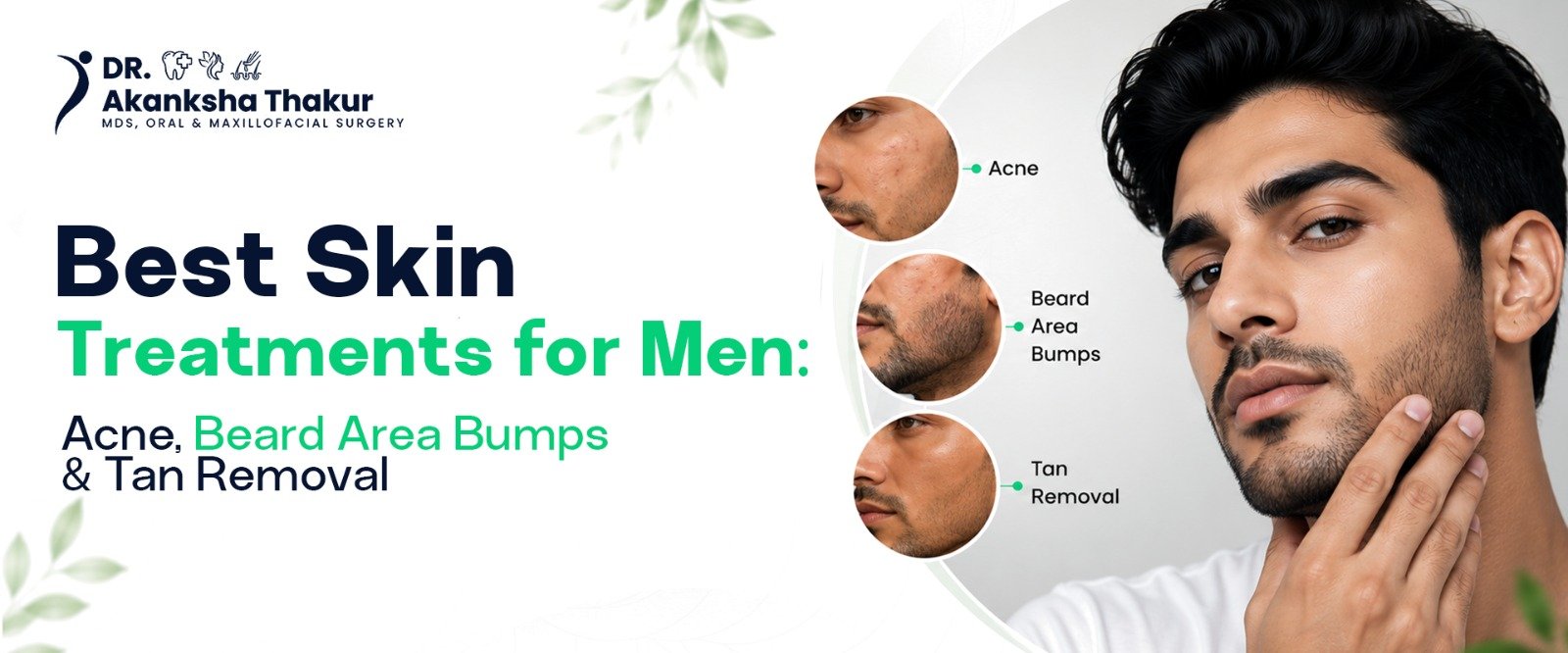
Men often deal with acne, beard area bumps, and tan at the same time because all three come from the same root causes, higher oil production, daily shaving, and more sun exposure. Acne responds best to benzoyl peroxide, salicylic acid, or retinoids depending on severity. Beard bumps improve with correct shaving technique and gentle exfoliation. Tan fades fastest with chemical peels or laser toning combined with daily sunscreen. For a personal skin assessment, Dr Akanksha Thakur offers consultations at her clinic in Kondapur, Hyderabad.
Key Takeaways
Acne, beard bumps, and tan in men usually share the same underlying causes rather than being three unrelated problems. Higher androgen levels make male skin oilier and thicker, which feeds acne and clogs follicles under the beard. Daily shaving is one of the biggest hidden triggers for both bumps and breakouts along the jaw. Sun exposure adds tan and pigmentation on top of an already irritated skin barrier. A single, consistent routine can address all three issues together instead of treating them as separate problems.
You get a breakout along your jaw right where your beard grows. You shave to look sharp for a meeting and end up with red bumps by evening. You spend the day out and notice your face is two shades darker by the time you get home. Most men assume acne, beard bumps, and tanning are separate problems. In reality, they often share the same underlying causes, including excess oil production, shaving irritation, and repeated sun exposure. This guide explains why men’s skin behaves this way and which treatments actually work for acne, beard bumps, and tan.
Why Do Men Get More Acne, Beard Bumps and Tan Than Women?
Male skin is genuinely different, and that difference explains why these three problems show up together so often. According to the National Health Portal of India, androgens such as testosterone drive increased sebum production, which is a major factor behind acne in both sexes but tends to be more pronounced in men due to naturally higher androgen levels. Thicker, oilier skin holds on to sweat, dirt, and dead skin cells more easily, which clogs pores faster than it does in women.
Daily shaving adds a second layer of stress that women’s skin rarely faces. Every pass of a razor creates tiny cuts and irritation along the jaw and neck, the exact area where beard-related bumps and jawline acne both concentrate. On top of this, men typically spend more hours outdoors without sunscreen, whether at work, during sports, or commuting, which adds tan and pigmentation to skin that is already inflamed from shaving and breakouts. Treating these three issues as one connected system, rather than three separate complaints, is why a proper routine works faster than picking a random product for each problem.
How Does a Dermatologist Find the Real Cause of Men’s Skin Problems?
A correct diagnosis matters just as much for men’s skin as it does for any other health concern, since acne, beard bumps, and pigmentation can look similar on the surface but need different treatment. A dermatologist typically starts with a full skin examination under good lighting, checking the face, jawline, neck, chest, and back for the pattern and depth of breakouts.
Acne grading comes next, where the dermatologist notes whether lesions are mostly blackheads and whiteheads, inflamed papules and pustules, or deeper nodules and cysts, since each grade responds to a different strength of treatment. A separate beard assessment checks hair curl pattern, shaving technique, and how deep the ingrown hairs sit, which decides whether the fix is a shaving change alone or something more. Pigmentation analysis under proper light helps tell a simple sun tan apart from deeper, more stubborn pigmentation that needs a different approach.
A lifestyle and medical history review rounds out the visit, covering shaving habits, sun exposure, sports or gym routine, and any medications or supplements that could be contributing. A qualified dermatologist registered under National Medical Commission standards is best placed to put these findings together into one treatment plan instead of guessing from a single symptom.
What Type of Acne Do You Have?
Not all acne looks or behaves the same, and knowing which type you have makes it easier to pick the right first-line treatment.
Blackheads and Whiteheads
These are the mildest form, caused by pores clogged with oil and dead skin. Blackheads stay open at the surface and oxidise to a dark colour, while whiteheads stay closed underneath the skin. Both usually respond well to salicylic acid and gentle exfoliation.
Papules and Pustules
Papules are small, firm, red bumps without visible pus, while pustules are similar but filled with visible white or yellow pus at the centre. This stage signals active inflammation and bacteria, and benzoyl peroxide is usually the most effective first step.
Nodules and Cystic Acne
These sit deeper under the skin, feel firm or tender to touch, and often leave marks or scars behind. This type rarely responds to over-the-counter products alone and usually needs oral medication or in-clinic treatment guided by a dermatologist.
What Is the Best Way to Treat Acne in Men?
Acne treatment for men works best when it matches the actual severity and cause, rather than reaching for the strongest product available. The National Health Portal notes that acne affects close to 90 percent of people at some point in life, and roughly one in twenty adults in their forties still deal with active breakouts, which shows how common adult male acne really is.
For mild to moderate acne, a gentle non-comedogenic cleanser combined with salicylic acid helps clear blocked pores without over-drying the skin. Benzoyl peroxide works well as a spot treatment for inflamed, red pimples, since it directly targets the bacteria involved. Retinoids, whether over-the-counter adapalene or a prescription-strength option, help prevent new clogged pores and improve overall texture over several months of consistent use. For moderate to severe or cystic acne, oral medication or in-clinic acne treatment becomes necessary, since topical products alone often cannot control deeper inflammation.
Why Men’s Acne Needs a Different Approach
Men typically tolerate stronger formulations than women because of thicker skin and higher oil output, which means gel or solution-based products often work better than heavy creams. Shaving over active acne also spreads bacteria and worsens inflammation, so adjusting shaving habits is part of acne treatment for men, not a separate issue.
What Causes Bumps in the Beard Area and How Do You Treat Them?
Beard area bumps, medically known as pseudofolliculitis barbae, happen when shaved hair curls back into the skin instead of growing straight out. This triggers inflammation, redness, and small raised bumps that can look similar to acne but need a different treatment approach. Men with curly or coarse facial hair are more prone to this problem, since curved hair is more likely to re-enter the skin after shaving.
Treatment starts with changing how you shave rather than adding more products. Using a sharp, single-blade razor instead of a multi-blade one reduces how close the cut sits to the skin, which lowers the chance of hair curling back in. Shaving in the direction of hair growth, not against it, and using a proper shaving cream instead of gel reduces friction and irritation. Gentle exfoliation two to three times a week, using a mild chemical exfoliant rather than a rough scrub, helps release trapped hairs before they become inflamed.
Shaving Habits That Make Beard Bumps Worse
Shaving too close, using a dull blade, or shaving dry skin without proper lubrication are the most common habits that turn a normal shave into a beard bump flare-up. Switching to an electric trimmer that leaves slight length, rather than shaving completely bare, prevents many cases from developing in the first place. If bumps persist despite these changes, a dermatologist can prescribe topical treatments or recommend laser hair reduction for the affected area.
How Do You Remove Tan From Men’s Skin Effectively?
Tan develops when skin produces extra melanin to protect itself from ultraviolet rays, and it tends to be more stubborn on men’s skin because of thicker skin layers and more frequent sun exposure without protection. The good news is that tan is one of the more treatable skin concerns once you address it consistently.
Chemical peels remain one of the most reliable tan removal options. A dermatologist applies a controlled acid solution that exfoliates the tanned outer layer, revealing fresher skin underneath, usually over four to six sessions spaced a few weeks apart. Laser toning targets excess melanin directly and tends to show faster visible results, often within a few sessions, though it needs to be done under proper medical supervision. For milder tan, a series of medi-facials combined with brightening actives like vitamin C can gradually even out skin tone without downtime.
None of these treatments prevent future tanning on their own. Daily sunscreen with at least SPF 30, reapplied through the day if you are outdoors, is the single most important habit for keeping results from fading. Skipping this step is the main reason tan removal treatments feel like they stop working after a few months.
How Can Men Prevent Acne, Beard Bumps and Tan?
Prevention works better than treatment because it stops all three problems at their shared source rather than fixing them one at a time. Daily sunscreen is the single biggest habit, since it prevents new tan and also protects skin that is already dealing with acne or shaving irritation from getting darker marks. A gentle, non-comedogenic cleanser used twice a day keeps oil and sweat from building up without stripping the skin barrier, which reduces both breakouts and clogged follicles under the beard.
Keeping your razor clean and sharp, and replacing blades regularly, cuts down on both infection risk and the friction that leads to bumps. Avoid picking or squeezing acne, since this pushes bacteria deeper and increases the chance of scarring and dark marks. A lightweight, oil-free moisturiser supports the skin barrier even on oily skin, which actually helps control excess oil production rather than making it worse. Most importantly, staying consistent with a simple routine works better long term than switching products every few weeks looking for faster results.
Can Acne, Beard Bumps and Tan Be Treated in One Routine?
Yes, and this is where most men waste time and money by buying separate products for each concern. A simplified routine built around the shared causes works better than three unrelated regimens. Start with a gentle, non-comedogenic cleanser twice daily to manage oil without stripping the skin. Follow with a treatment step, salicylic acid or benzoyl peroxide for active acne, that also helps keep beard area pores clear. Shave using proper technique with a sharp blade and shaving cream to reduce bump formation. Finish every morning with sunscreen, which protects against both new tanning and the dark spots that acne and razor irritation can leave behind.
A dermatologist can combine in-clinic treatments, such as a mild chemical peel that addresses both acne marks and tan in the same session, which is far more efficient than treating each concern separately over months.
| Concern | Best First-Line Treatment | Typical Timeline | Maintenance |
|---|---|---|---|
| Mild to moderate acne | Salicylic acid or benzoyl peroxide | Visible change in 4 to 6 weeks | Continue routine, avoid picking |
| Beard area bumps | Shaving technique change plus exfoliation | Improvement in 2 to 4 weeks | Sharp blade, exfoliate weekly |
| Tan and uneven tone | Chemical peel or laser toning | Visible results in 3 to 5 sessions | Daily sunscreen, SPF 30 or higher |
| Combined skin concerns | Dermatologist-guided routine with in-clinic support | Noticeable change in 6 to 8 weeks | Follow-up review every few months |
When Should a Man See a Dermatologist for These Skin Concerns?
Home care and over-the-counter products handle most mild cases, but certain signs mean it is time for a professional opinion. See a dermatologist if acne is painful, cystic, or leaving scars, if beard bumps keep getting infected or do not improve after changing your shaving routine, or if tan or pigmentation has not faded after consistent sunscreen use and home treatment for a few months. A proper skin assessment helps identify whether these issues are purely cosmetic or linked to an underlying cause that needs medical attention. If you are in Hyderabad, you can book a dermatologist consultation in Kondapur for a full skin evaluation, including a skin brightening plan if pigmentation is part of the concern.
Pros and Cons of Common Men’s Skin Treatments
Benzoyl peroxide and salicylic acid are widely available and affordable, and they work quickly on inflamed acne without needing a prescription. They suit men who want an accessible first step before considering a clinic visit.
The trade-off is that both can dry out the skin if overused, and results plateau if the acne cause is hormonal or deeper than surface-level.
Chemical peels for tan removal give visible improvement within a few sessions and also help with acne marks at the same time. They work well for men who want a noticeable change without a long treatment course.
The downside is some redness and mild peeling for a few days after each session, and results fade without daily sunscreen.
Laser toning delivers faster tan reduction than peels in most cases and needs fewer total sessions overall. It suits men with deeper or more stubborn tan who want quicker visible results.
It costs more per session than a peel, and it needs to be performed by a trained professional to avoid uneven results.
Changing shaving technique for beard bumps costs nothing and prevents the problem at its source rather than just treating symptoms. It is the easiest starting point for most men before trying any product-based fix.
The limitation is that it takes a few weeks of consistency to see full improvement, and it will not fix bumps caused by an underlying skin condition on its own.
Frequently Asked Questions
Q: Why do I keep getting acne along my jawline specifically?
A: Jawline acne in men is often linked to shaving irritation combined with oil buildup in that area. Bacteria from a used razor or leftover shaving product can also clog pores, making the jawline more prone to breakouts than other parts of the face. Switching to a clean, sharp blade and washing your face right after shaving usually reduces this over a few weeks.
Q: Are beard bumps the same as acne?
A: No. Beard bumps come from curled hair re-entering the skin after shaving, while acne comes from blocked oil glands filling with oil and bacteria. They can look similar and even occur in the same area at the same time, but the treatment approach for each is different, which is why a proper diagnosis matters before starting treatment.
Q: How long does it take to see results from tan removal treatment?
A: Most people see visible improvement after three to five sessions of a chemical peel or laser toning, spaced a few weeks apart. Full results depend on how deep the tan is, your skin type, and how consistently sunscreen is used afterward. Skipping sunscreen between sessions is the most common reason results take longer than expected.
Q: Can I use the same face wash for acne and tan?
A: A gentle, non-comedogenic cleanser suits both concerns and forms the base of the routine either way, but the active treatment step should be different. Salicylic acid or benzoyl peroxide targets acne, while brightening actives like vitamin C support tan reduction, and both can be layered into the same daily routine without conflict.
Q: Will shaving less often reduce beard bumps?
A: Shaving less can help temporarily by giving irritated skin time to calm down, but the bigger factor is technique. Using a sharp blade, shaving with the grain instead of against it, and exfoliating regularly usually reduces bumps more effectively than simply skipping shaves, which only delays the problem.
Q: Why does my beard area always break out after shaving?
A: This usually happens because shaving spreads bacteria and oil across the skin while also creating tiny cuts that let irritation in more easily. Using a clean blade every time, shaving after cleansing rather than before, and applying a light, alcohol-free aftershave can reduce how often this happens.
Q: Can sunscreen alone remove an existing tan?
A: No. Sunscreen prevents new tanning and protects results from fading, but it cannot lighten tan that has already formed. Removing existing tan needs an active treatment such as a chemical peel, laser toning, or a brightening routine, with sunscreen used alongside it to protect the progress.
About Dr Akanksha Thakur
Dr Akanksha Thakur is a dermatologist based in Kondapur, Hyderabad, who treats men’s skin concerns including acne, beard area bumps, and tan or pigmentation with a routine built around the actual cause rather than generic products. Her clinic offers in-person and online consultations, along with in-clinic treatments like chemical peels and laser toning for stubborn tan and acne marks. The goal is one clear plan that addresses your skin as a whole, not three separate fixes. Learn more at drakankshathakur.in.
If breakouts, beard bumps, or tan have been bothering you for a while, book a consultation with Dr Akanksha Thakur today to get a routine built specifically for your skin.


