


Subtotal $0.00
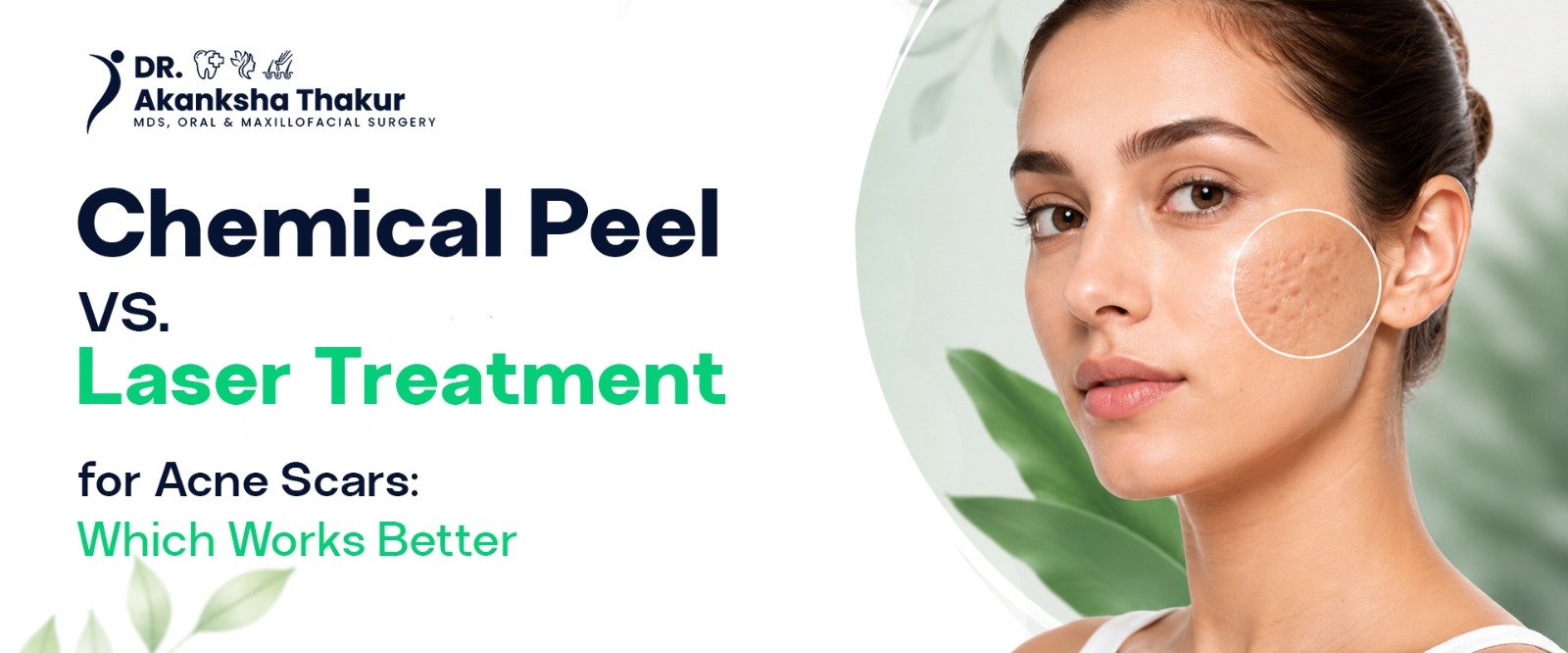
Quick Answer: Chemical peels use acid to remove damaged outer skin and work best for shallow scars and pigmentation. Laser treatment uses focused light energy to rebuild collagen deeper in the skin and works better for pitted or textured scars. Laser generally gives faster results on deep acne scars, while peels stay the safer, more budget friendly choice for surface marks, especially on darker skin. A doctor at Dr Akanksha Thakur’s clinic in Kondapur, Hyderabad can assess your scar type before recommending either option.
Acne fades on its own in most cases, but the marks it leaves behind rarely do. If your skin still shows dips, dark patches, or rough texture months after your breakouts cleared up, you have probably searched for a fix and landed on two names again and again: chemical peel treatment and laser skin resurfacing. Both promise smoother skin. Both come with a price tag and some downtime. And most articles online tell you to just consult a doctor without explaining why one option might suit you better than the other.
This article breaks down the real differences so you can walk into that consultation already understanding your options.
What Is the Real Difference Between a Chemical Peel and a Laser Treatment?
A chemical peel is a controlled acid solution applied to your face. The acid removes the top damaged layer of skin. As that layer sheds, fresh skin grows in its place. Peels come in three strengths. Light peels use mild acids like glycolic peel or lactic acid formulas. Medium peels use trichloroacetic acid, known as TCA peel. Deep peels use stronger agents and need longer recovery.
Laser resurfacing works differently. It does not use any chemical. Instead, it sends short pulses of light energy into the skin. A fractional laser or fractional CO2 laser removes the top skin layer in tiny, evenly spaced columns, which is called ablative laser treatment. A non ablative laser heats the deeper skin layer without touching the surface. Both types push your skin to make new collagen, which fills in scar tissue over time through a process called collagen remodeling.
In short, a peel works from the outside by removing skin. A laser works from the inside by rebuilding it. This one difference explains almost every other difference between chemical peel for acne scars and laser resurfacing.
Which Type of Acne Scar Responds Better to Peels or Lasers?
Not all acne scars are the same, and this is where most articles stop short. Your scar type decides which treatment actually helps with acne scar removal.
Do Chemical Peels Work on Ice Pick and Deep Scars?
Ice pick scars are narrow, deep holes that go far below the skin surface. Chemical peels only reach the top layers of skin, so they rarely fix ice pick scars on their own. A peel can lighten the dark ring around post acne scars, but it will not fill the hole. For true ice pick scars, most doctors recommend laser treatment or a combination approach instead of relying on peels alone.
Are Lasers Better for Rolling and Boxcar Scars?
Rolling scars create a wavy, uneven surface, and boxcar scars leave sharp edged depressions. Both sit deeper in the skin than surface discoloration. Laser treatment reaches this depth and stimulates new collagen growth right where the scar tissue sits. This makes lasers, particularly fractional laser devices, the stronger choice for rolling and boxcar scars, with more noticeable improvement in fewer sessions than peels alone.
If your scars are mostly flat discoloration, dark spots, or mild texture changes rather than deep pits, a chemical peel can still do the job well and at a lower cost.
Is a Chemical Peel or Laser Treatment Safer for Indian and Darker Skin Tones?
This is the question almost every clinic in India needs to answer honestly, and it is the part most Western skincare articles skip entirely.
Dark skin acne scars carry a higher risk of a side effect called post inflammatory hyperpigmentation, meaning dark patches that form after the skin heals from an injury or procedure. This risk applies to pigmentation after acne as well as to the treatment itself. Aggressive ablative lasers and strong chemical peels both carry this risk if used carelessly on melanin rich skin.
Milder options, such as lactic acid or mandelic acid peels, are generally considered gentler on darker skin and carry a lower pigmentation risk than deep peels or strong ablative lasers. Non ablative and fractional lasers are also considered safer for Indian skin tones compared to fully ablative lasers, because they cause less surface trauma.
This does not mean laser treatment is off the table for darker skin. It means the type of laser and the settings used matter far more than the treatment category itself. A doctor who regularly treats Indian skin will choose the gentlest effective option rather than the strongest one available.
How Do Downtime, Sessions, and Results Compare Between the Two Treatments?
Light chemical peels usually cause mild redness and flaking for two to three days. Medium peels can leave the skin red, tight, and visibly peeling for five to seven days. Deep peels need the longest recovery, sometimes two weeks or more, with noticeable swelling and peeling. Peels almost always need a series of sessions spaced two to four weeks apart. Light peels may need six or more sessions for visible scar improvement, and most people notice a real difference only after the third or fourth visit.
Non ablative laser treatment usually causes redness and mild swelling that settles within a day or two, making it easier to fit around a work schedule, and it typically needs three to six sessions. Ablative laser treatment has a longer recovery, often five to ten days, since it removes the top skin layer directly, but it can show visible change in just one or two sessions, though full collagen remodeling still takes a few months to complete.
| Factor | Chemical Peel | Laser Treatment |
|---|---|---|
| Best for | Surface scars, pigmentation | Deep, pitted scars |
| Sessions needed | 4 to 8 | 1 to 6 |
| Downtime | 2 days to 2 weeks | 1 day to 10 days |
| Pain level | Mild stinging | Mild to moderate |
| Darker skin suitability | Good with mild acids | Good with fractional or non ablative types |
| Relative cost | Lower per session | Higher per session |
| Visible results | Gradual, over months | Faster, within weeks |
If you cannot take visible downtime, a light chemical peel or a non ablative laser session will disrupt your routine the least. If you want faster, more dramatic results and can plan around a short recovery window, ablative laser treatment or a medium peel may suit you better.
Can You Combine Chemical Peels and Laser Treatment for Better Results?
This combination approach is often the smartest option, though few articles explain how it actually works in practice. Doctors sometimes start with a series of light chemical peels to improve skin tone and reduce surface pigmentation. Once the skin looks healthier and more even, they follow up with targeted laser resurfacing to address the deeper textural scars that peels cannot reach.
This sequencing matters. Doing peels first calms down active pigmentation issues, which lowers the risk of new dark patches forming after laser treatment. Trying to combine both treatments too close together, or in the wrong order, raises the risk of irritation and prolonged redness. A doctor typically leaves a gap of several weeks between switching from one treatment type to another. Some clinics also add microneedling between peel and laser cycles for extra collagen stimulation, though this depends on individual skin assessment.
What Are the Risks and Limitations of Each Treatment?
Chemical peel benefits. Chemical peels cost less per session and involve shorter downtime for lighter formulas. They work well on pigmentation, uneven tone, and mild texture issues, and they suit a wide range of skin types when the right acid strength is chosen.
Chemical peel limitations. Peels rarely fix deep, pitted scars on their own, and stronger peels carry a real risk of dark patches on unprepared or darker skin. Results also take longer to appear since they depend on a full series of sessions rather than one or two visits.
Laser treatment benefits. Lasers reach deeper into the skin, which makes them more effective for rolling, boxcar, and some ice pick scars. Results often show up faster, and non ablative options keep downtime short for people with limited recovery time.
Laser treatment limitations. Ablative lasers need a longer recovery and cost more per session. Aggressive laser settings on unprepared darker skin can trigger temporary or, in rare cases, lasting pigmentation changes, which is why the choice of laser type matters as much as the choice between peel and laser.
Neither treatment is a one time fix. Both require follow up sun protection and, in many cases, maintenance sessions to hold on to results.
Pros and Cons at a Glance
Chemical peels work best when your scars are shallow, your budget is limited, and you can commit to multiple sessions over a few months.
Chemical peels may not be ideal when your scars are deep and pitted, since surface exfoliation alone will not rebuild lost tissue in those areas.
Laser treatment works best when you have textured or pitted scars and want visible change in fewer visits, and you can plan around some recovery time.
Laser treatment may not be ideal when your budget is tight or your skin has active inflammation, since lasers cost more and need calm, prepared skin for the safest results.
What Should You Expect During Your First Doctor Consultation?
A proper consultation starts with a full skin examination, not just a quick look at your scars. The doctor checks your skin type and tone, grades how deep your scars are, and looks for any active acne, since starting a peel or laser on inflamed skin raises the risk of complications. Sun exposure history and any past reactions to skincare or procedures also factor into the plan.
Photos are usually taken at this stage so your progress can be tracked honestly over several sessions rather than guessed at. A patch test may be recommended before a first peel or laser session, particularly if you have sensitive or reactive skin. The doctor then gives you a realistic estimate of how many sessions you will likely need, along with what recovery will look like between them.
Treating acne scars early matters more than most people realise. According to the Indian Council of Medical Research Standard Treatment Workflow for Acne and Rosacea, treating acne promptly is important specifically because it keeps resulting scarring to a minimum. This is also why a doctor will often ask about your current acne activity before agreeing to start peel or laser sessions, since treating live breakouts alongside old scars gives better long term results than treating scars in isolation.
Frequently Asked Questions
Q: Can chemical peels remove deep acne scars completely?
A: Chemical peels rarely remove deep, pitted scars completely because they only affect the outer skin layers. They work better on surface discoloration and mild texture issues. For ice pick or boxcar scars, laser treatment or a combination approach usually gives better and more complete results.
Q: Is laser treatment painful for acne scars?
A: Most patients describe laser treatment as a warm, snapping sensation rather than sharp pain. Numbing cream is applied before ablative sessions to reduce discomfort. Non ablative laser treatment feels milder and is usually well tolerated without strong numbing agents.
Q: How long do results from acne scar treatment last?
A: Results from both chemical peels and laser treatment can last for years when paired with good sun protection and skin care. New scars will not appear from old acne, but new breakouts can create fresh scars, so ongoing acne control matters just as much as the scar treatment itself.
Q: Which is cheaper, chemical peel or laser treatment for acne scars?
A: Chemical peels generally cost less per session than laser treatment, though peels often need more sessions overall to reach similar results. The total cost depends on how many sessions your scar type needs, so a lower per session price does not always mean a lower total cost.
Q: Is microneedling better than laser for acne scars?
A: Microneedling and laser both stimulate collagen, but they work differently. Microneedling creates tiny punctures with fine needles, while laser uses light energy. For deep pitted scars, laser generally shows faster results, though some doctors combine microneedling with peels or laser for added benefit.
Q: How do I know if my skin is suitable for laser treatment?
A: A doctor checks your skin tone, current pigmentation, active breakouts, and scar depth before recommending a laser type and setting. This assessment matters more for darker skin tones, where the wrong laser strength can trigger temporary dark patches.
Getting the Right Treatment Plan for Your Skin
Choosing between a chemical peel and laser treatment is not about picking the trendier option. It comes down to your scar type, your skin tone, your budget, and how much downtime you can manage. At Dr Akanksha Thakur’s clinic, an acne scar treatment plan in Kondapur, Hyderabad always starts with a proper skin assessment before any procedure is suggested, because the same scar on two different people can need two different approaches. The goal is always a plan that fits your skin, not a one size fits all procedure.
If you are still unsure which option suits your scars, book a consultation and get a clear, honest assessment before you commit to either treatment. Visit drakankshathakur.in to book your appointment


